
Montreal Gazette: The tide has turned on the environment, but the quiet work continues
Despite the change in rhetoric on the climate dossier, people haven’t stopped caring about what’s important.
Justine McIntyre
6/16/20263 min read
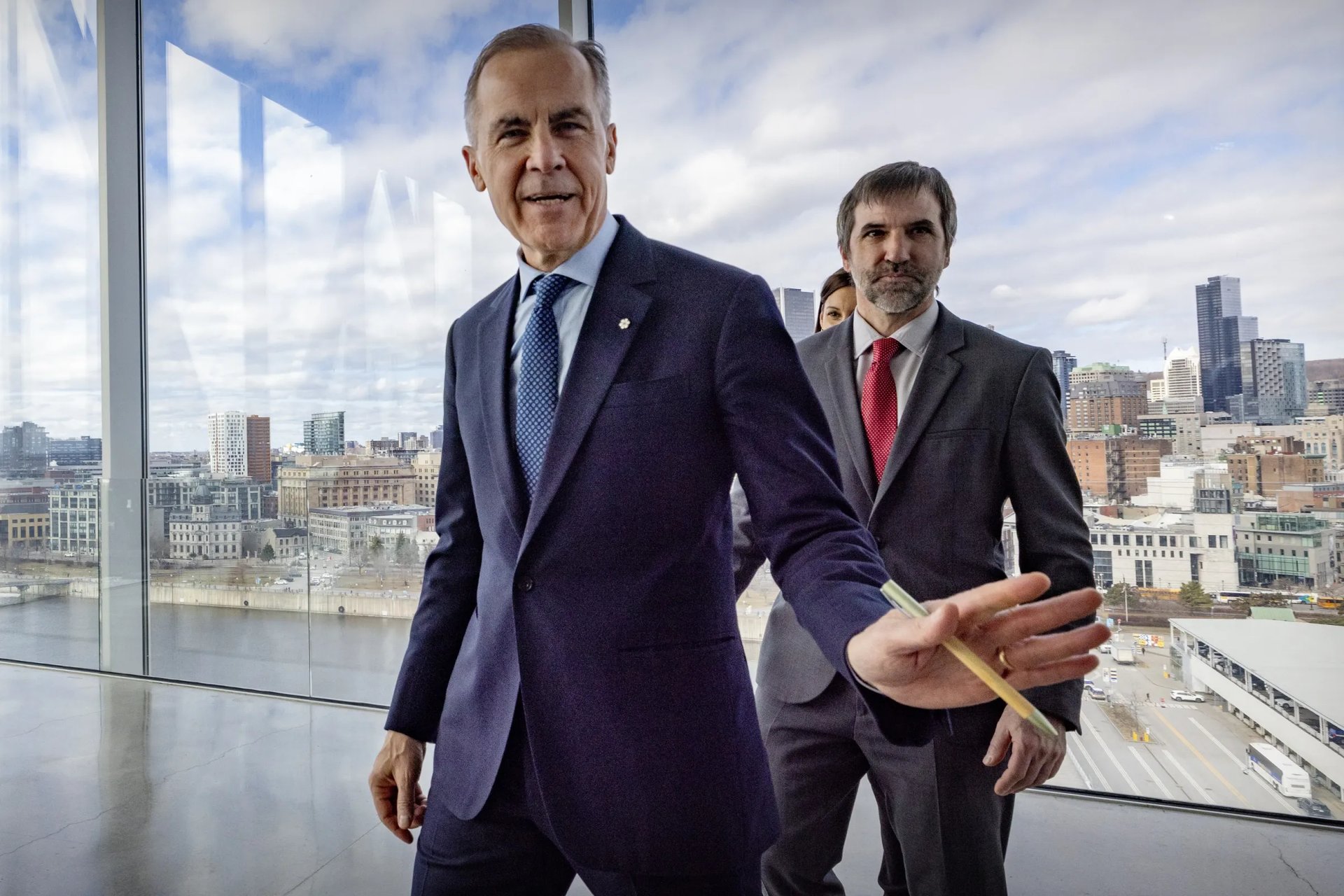
Prime Minister Mark Carney with then environment minister Steven Guilbeault in Montreal last year. Guilbeault's resignation added to the deepening sense of discouragement among environmentalists, writes Justine McIntyre. (John Mahoney / Montreal Gazette)
By Justine McIntyre, Special to the Montreal Gazette
Original publication June 3, 2026 Montreal Gazette
I attended a recent webinar hosted by the interuniversity research centre CIRANO. The topic was urban green infrastructure and the tools and methods for planning and assessing their impacts.
A decade ago, when I was elected as city councillor, green infrastructure was all the rage, with an outpouring of forums offering research on rain gardens, bioswales, permeable pavement, urban forests and other green infrastructures providing tangible solutions at low cost to cities dealing with the impacts of climate change.
Now, listening online behind my anonymized icon, I felt like a member of a dying cult attending a secret meeting for the keepers of the faith.
Forgive me for pointing out that these are discouraging times for environmentalists.
While much of the public discourse around the climate and the environment more broadly seems to have evaporated, other more strident voices are taking precedence. Headlines remind us that Canada must defend its sovereignty and protect national unity. Countless events online and in-person propose to address the economic pressures faced by businesses and households due to American tariffs on Canadian products and the fuel price shock caused by the U.S.-Israel war with Iran.
Opinion polling points to a shift in public perception too. Where pipelines were once unpopular with Canadians, new data from Angus Reid shows a majority of Canadians support Enbridge’s Westcoast natural gas pipeline expansion. Further, three in five Canadians (61 per cent) believe economic growth should be prioritized over environmental protection (that number is lowest in Quebec, at 52 per cent.)
Governments have no choice but to meet the moment, responding to national and international situations as they develop. This means a change in rhetoric and in public policy that has shuffled the climate dossier to the bottom of the stack marked “urgent.”
Still, Steven Guilbeault’s resignation last week, while not unexpected given his increasingly vocal criticism of the Liberal government’s actions to accelerate the approval process for pipelines, nevertheless landed heavily, adding to the deepening sense of discouragement.
While environment minister in Justin Trudeau’s cabinet, Guilbeault introduced carbon pricing as an effective tool for reducing dependency on fossil fuels as part of an ambitious climate strategy. By the time Mark Carney became prime minister last year, carbon pricing had become politically toxic, strongly associated with Conservative attacks on predecessor Trudeau, and linked to Canadians’ frustration with the rising cost of living.
There was an early understanding that some of it, the consumer part, would be sacrificed — but that was just the start of a long list of rollbacks on climate policy that incited Guilbeault to resign first from cabinet, and finally leave federal politics altogether.
What underlies this shift? Canadians, Guilbeault included, thought we were getting a climate-friendly prime minister, given his track record as UN special envoy for climate and finance. I recall how forward-thinking Carney’s 2015 speech was when, addressing Lloyd’s of London as governor of Bank of England, he called climate change the “tragedy of the horizon,” warning that a failure to invest early in a low-carbon transition would spell disaster for our economies down the road.
I can’t imagine Carney just woke up one day thinking he’d file that speech in the recycling bin and write up a new one where we go all-in on pipelines. Along with climbing economic uncertainty, Alberta appeasement surely is a factor in view of its recent push for sovereignty — although dealing with Albertan frustration with a federal government largely viewed as wasteful, sluggish and highly bureaucratic is certainly nothing new.
The real reason is embedded in Carney’s Davos speech, which points to a rupture in the world order, posing an existential threat to Canadian sovereignty. As leader of one of the world’s largest oil producing countries, Carney has understood that despite the overwhelming climate argument against it, if we don’t exploit our resources, others will, through might or right.
That does not mean that previous climate-related challenges have disappeared or, as some suggest, have been overblown. The threat of catastrophic impacts in the face of inaction to curb emissions is neither diminished nor replaced. It’s a layering rather than a substitution.
Kicking the energy-transition can down the road might bring temporary relief, but as Carney said in 2015, “risks will only increase as the science and evidence of climate change hardens.”
Meanwhile, the quiet work continues, as it must, and patiently earned local victories are celebrated. Because whether current policy reflects it or not, people haven’t stopped caring about what’s most important: the people we love, the places we live, and the nature that inhabits them.
Contact
Reach out anytime for your consulting needs.
info@civicastrategies.ca
© 2026. ALL RIGHTS RESERVED.